Retirement Distributions, Pandemic Trends, Gamestop


SCHENLEY CAPITAL, INC.
One Village Square, Suite 200
417 Walnut Street
Sewickley, PA 15143
Telephone: 412-749-9256
Facsimile: 412-774-1918
Email: ehgenter@www.schenleycapital.com
Web Address: www.schenleycapital.com
10/ 23/2020
This brochure provides information about the qualifications and business practices of Schenley Capital, Inc. If you have any questions about the contents of this brochure, please contact us at 412-749-9256 or ehgenter@www.schenleycapital.com. The information in this brochure has not been approved or verified by the United States Securities and Exchange Commission or by any state securities authority. Reference made to Schenley Capital, Inc. as a registered investment adviser should not be interpreted to imply any particular level of skill or training.
Additional information about Schenley Capital, Inc. also is available on the SEC’s website at www.adviserinfo.sec.gov. You can search this site by a unique identifying number, known as a CRD number. Our firm’s CRD number is 133415.
Since our last filed update to this Form ADV, Part 2A Disclosure Brochure on April 01, 2019, there has been no material changes made.
As required, should we make material changes to this Disclosure Brochure we will, within 120 days of the end of our fiscal year, provide our clients with either: (i) a copy of the amended Form ADV, Part 2A Disclosure Brochure accompanied by a summary of material changes; or (ii) a summary of the material changes and an offer to provide a copy of the complete, current Form ADV, Part 2A Disclosure Brochure upon your request. As applicable, we urge you to carefully review any notice of material amendments to this Disclosure Brochure in the future as it will contain important information that may pertain to, among other things, changes to our advisory services, fee structures, business practices, conflicts of interest, or disciplinary history.
.
Item 1. Cover Page………………………………………………………………………………………………………. 1
Item 2. Material Changes………………………………………………………………………………………………. 2
Item 3. Table of Contents……………………………………………………………………………………………… 3
Item 4. Advisory Business……………………………………………………………………………………………… 4
Item 5. Fees and Compensation…………………………………………………………………………………… 7
Item 6. Performance-Based Fees and Side-By-Side Management…………………………………………. 10
Item 7. Types of Clients………………………………………………………………………………………………. 10
Item 8. Methods of Analysis, Investment Strategies, and Risk of Loss……………………………………. 10
Item 9. Disciplinary Information…………………………………………………………………………………. 13
Item 10. Other Financial Industry Activities and Affiliations……………………………………………….. 13
Item 11. Code of Ethics, Participation or Interest in Client Transaction, and Personal Trading……. 14
Item 12. Brokerage Practices………………………………………………………………………………………. 15
Item 13. Review of Accounts………………………………………………………………………………………. 18
Item 14. Client Referrals and Other Compensation………………………………………………………….. 19
Item 15. Custody………………………………………………………………………………………………………. 20
Item 16. Investment Discretion……………………………………………………………………………………. 20
Item 17 Voting Client Securities………………………………………………………………………………….. 20
Item 18. Financial Information…………………………………………………………………………………….. 21
Item 19 Requirements for State-Registered Advisers………………………………………………………. 21
Schenley Capital, Inc. (hereinafter “Schenley,” “the firm,” “us,” “we,” or “our”) is a state-registered investment adviser with its principal place of business located in Sewickley, Pennsylvania.
Incorporated in 1985, Schenley began conducting business as an SEC registered investment adviser in 2005. Elizabeth H. Genter, President and Chief Compliance Officer of Schenley, is also the firm’s principal owner (defined as those individuals and/or entities controlling 25% or more of the firm).
Schenley strives to provide a high degree of personal service and superior investment advice. Schenley’s expertise is in the area of portfolio management and manager placement. Our strength is in creating high quality diverse investment portfolios, to help our assets grow and achieve aspirations…now and in the future. Through asset allocation and careful research, we select and manage investment portfolios for our clients. We assist our clients in attaining their financial goals. We enjoy working with other professionals, such estate attorneys, on accounts which we translate, analyze, and interpret information provided by the various professionals for our clients.
Schenley offers the following advisory services to our clients:
Portfolio Management Services
Schenley constructs and manages client investment portfolios based on the individual needs of the client. Through personal discussions in which goals and objectives based on a client’s particular circumstances are established, we develop a client’s personal investment policy and create and manage a portfolio based on that policy. Schenley will manage advisory accounts on a non- discretionary or discretionary basis. Account supervision is guided by the stated objectives of the client (i.e., maximum capital appreciation, growth, income, or growth and income).
We will create a portfolio consisting of one or all of the following types of securities:
Schenley will allocate the client’s assets among various investments taking into consideration the overall management style selected by the client. The equities will be selected with a fundamental analysis approach to investment selection. The mutual funds and ETFs will be selected on the basis of any or all of the following criteria: the fund’s performance history; the industry sector in which the fund invests; the track record of the fund’s manager; the fund’s investment objectives; the fund’s management style and philosophy; and the fund’s management fee structure and expense ratio.
Portfolio weighting among securities and market sectors will be determined by each client’s individual needs and circumstances. Clients will have the opportunity to place reasonable restrictions on the types of investments which will be made on the client’s behalf. Clients will retain individual ownership of all securities.
Schenley will monitor Portfolio Management Services accounts at least quarterly and rebalance as needed. The client should notify Schenley immediately of any material change in the client’s personal and/or financial situation which would require review/revision of the client’s account. If Schenley believes that a particular investment is performing inadequately, or if Schenley believes that a different investment is more suitable, then Schenley will recommend a different investment. Schenley will contact the client before making any such change.
Financial Planning Services
We also provide investment advice in the form of Financial Planning. Clients engaging the firm to provide this service will receive a written comprehensive report containing a detailed financial plan designed to achieve the client’s stated financial goals and objectives. We will provide detailed projections based on a client’s assets, income, and expenses. The projections and detailed reports such as net worth, cash flow, retirement distributions and college projections.
In general, the financial plan will address any or all of the following areas of concern:
In the conclusion section of the financial plan we provide recommendations for the individual (s). Should a client choose to implement the recommendations contained in the plan, Schenley suggests moving onto the new client onboarding process of reviewing our ADV Part 2A, signing a Schenley Capital Agreement and an appropriate institutional brokerage form. The implementation of the financial plan recommendations is entirely at the client’s discretion. Schenley has no referral fee arrangements with any third-party professional.
Financial Planning recommendations are not limited to any specific product or services offered by any firm or insurance company. All recommendations are of a generic nature.
Schenley gathers required information through in-depth personal interviews. Information gathered includes a client’s current financial status, future goals and attitudes towards risk. Related documents supplied by the client are carefully reviewed, including a questionnaire completed by the client, and a written report is prepared.
Should a client choose to implement the recommendations we will proceed with an investment proposal and work closely with his/her attorney and accountant. Upon request, Schenley may recommend third party professionals to assist the client with implementation of plan recommendations. Schenley may also act as liaison between the client and his/her network of professionals to coordinate implementation of plan recommendations. Implementation of financial plan recommendations is entirely at the client’s discretion. Schenley has no referral fee arrangements with any third party professional.
Financial Planning recommendations are not limited to any specific product or service offered by a broker dealer or insurance company. All recommendations are of a generic nature. Schenley utilizes the eMoney platform when creating a financial plan.
Consulting
Clients can also receive investment advice on a more limited, as needed, basis. This may include advice on an isolated area(s) of concern such as estate planning, retirement planning, reviewing a client’s existing portfolio, or any other specific topic. Schenley also provides specific consultation and administrative services regarding investment and financial concerns of the client.
Additionally, Schenley provides advice on non-securities matters. Generally, this is in connection with the rendering of estate planning, insurance, and/or annuity advice.
When a client has not had a copy of the brochure documents at least 48 hours prior to signing an agreement, client has five business days in which to cancel, without penalty.
Amount of Managed Assets
As of 12/31/2019, we were actively managing $31,072,268 of clients’ assets on a non-discretionary basis, and $1,722,355 on a discretionary basis, for a total of $32,794,623 in assets under management.
Schenley does not participate in, sponsor, or otherwise offer wrap fee programs.
Portfolio Management Services
The annual fee for portfolio management services will be charged as a percentage of assets under management, according to the following schedule:
Assets Under Management Annual Fee
$250,000 – $20,000,000 1.00%
$20,000,001 – $35,000,000 0.80%
$35,000,001 – $50,000,000 0.75%
Above $50,000,000 Negotiable
A minimum of $250,000 of assets under management is required for this service. This account size and the above fee schedule may be negotiable under certain circumstances. Schenley may group certain related client accounts for the purposes of achieving the minimum account size and determining the annualized fee.
Clients will be invoiced or their account directly debited, as authorized, in arrears at the beginning of each calendar quarter based upon the value (market value or fair market value in the absence of market value), of the client’s account at the end of the previous quarter.
Direct Debiting of Advisory Fees: Fees will be debited from the account in accordance with the client authorization in the Investment Advisory Agreement. We adhere to the following safeguarding procedures:
Financial Planning
Financial planning fees will be charged as a fixed fee, typically ranging from $500 to $5,000. Schenley’s financial planning fee will be determined based on the complexity of each client’s circumstances and an estimate of the total hours required. All fees are agreed upon prior to entering into a contract with any client.
A retainer may be requested upon completion of Schenley’s fact-finding session with the client; however, advance payment will never exceed $1,200 for work that will not be completed within six months. The balance will be due upon completion of the plan.
The length of time it will take to provide a financial plan will depend on each client’s personal situation. Typically, however, the financial plan will be presented to the client within 90 days of the contract date, provided that all information needed to prepare the financial plan has been promptly provided by the client.
Consulting Services
Schenley’s consulting fees will be calculated based on a rate of $350 per hour. The length of time it will take to complete the consulting service will depend on the nature and complexity of the individual client’s personal circumstances. An estimate for total hours will be determined at the start of the advisory relationship. All fees are agreed upon prior to entering into a contract with any client
Fees are due and payable upon completion of the consulting service. A retainer may be requested upon completion of Schenley’s fact-finding session with the client; however, advance payment will never exceed $1,200 for work that will not be completed within six months. The balance will be due upon completion of the consultation. There is no minimum fee for consulting services.
GENERAL INFORMATION
Negotiability of Advisory Fees: Although Schenley has established the aforementioned fee schedules; we retain the discretion to negotiate alternative fees on a client-by-client basis. Client facts, circumstances and needs will be considered in determining the fee to be charged. These include the complexity of the client, assets to be placed under management, anticipated future additional assets; related accounts; portfolio style, account composition, reports, among other factors. The specific annual fee schedule will be identified in the contract between the adviser and each client.
Discounts, not generally available to our advisory clients, may be offered to family members and personal acquaintances of the associated persons of our firm.
Termination of the Advisory Relationship: An advisory agreement may be canceled at any time, by either party, for any reason upon receipt of 30 days written notice. Upon termination of any account, any prepaid, unearned fees will be promptly refunded, and any earned, unpaid fees will be due and payable. The client has the right to terminate an agreement without penalty within five business days after entering into the agreement.
Fund Fees: All fees paid to Schenley for investment advisory services are separate and distinct from the fees and expenses charged by mutual funds and/or exchange-traded funds (ETFs) to their shareholders. These fees and expenses are described in each fund’s prospectus. These fees will generally include a management fee, other fund expenses, and a possible distribution fee. If the fund also imposes sales charges, a client may pay an initial or deferred sales charge. A client could invest in a mutual fund directly, without our services. In that case, the client would not receive the services provided by our firm which are designed, among other things, to assist the client in determining which mutual fund or funds are most appropriate to each client’s financial condition and objectives.
Accordingly, the client should review both the fees charged by the funds and our fees to fully understand the total amount of fees to be paid by the client and to thereby evaluate the advisory services being provided.
Additional Fees and Expenses: In addition to our advisory fees, clients are also responsible for the fees and expenses charged by custodians and imposed by broker dealers, including, but not limited to, any transaction charges imposed by a broker dealer with which an independent investment manager effects transactions for the client’s account(s). Please refer to the “Brokerage Practices” section (item 12) of this brochure for additional information.
Private Fund Recommendations: As appropriate, Schenley may recommend to advisory client’s investments in certain private funds, such as, private equity funds or other private, pooled investment vehicles. Investment in these entities will typically involve the payment of fees and expenses separate from and in addition to the advisory fees charged by Schenley to clients including, for example, management fees and/or a performance-based incentive allocation. Detailed information about the fees and expenses related to such investments is included in the offering documents provided to prospective investors.
Because these types of investments involve certain additional degrees of risk, they will only be recommended when consistent with the client’s stated investment objectives, tolerance for risk, liquidity and suitability. Schenley will only recommend private funds whose managers have been vetted by Schenley’s due diligence process. Any recommendation of a private fund will be made only to appropriately qualified and accredited investors.
There is currently no referral compensation arrangement between the manager, general partner or other representative of any private fund recommended to clients and Schenley.
Advisory Fees in General: Clients should note that similar advisory services may (or may not) be available from other registered (or unregistered) investment advisers for similar or lower fees.
Schenley does not charge performance-based fees to any client.
Schenley provides advisory services to individuals, including high net worth individuals, pension and profit sharing plans, trusts, estates and charitable organizations, corporations or other business entities and state or municipal government entities.
As previously disclosed in Item 5 of this Brochure, our firm has established certain initial minimum account requirements for establishing and maintaining an account, based on the nature of the service(s) being provided. For a more detailed understanding of those requirements, please review the disclosures provided in each applicable service.
Money Manager Search & Monitoring clients should note that, in addition to Schenley’s minimums, the independent investment adviser(s) recommended to the client may also require a minimum account size. The independent investment adviser’s management fee schedule and account minimums, if any, are disclosed in the firm’s disclosure document.
Methods of Analysis
We use the following methods of analysis in formulating our investment advice and/or managing client assets:
Fundamental Analysis. We attempt to measure the intrinsic value of a security by looking at economic and financial factors (including the overall economy, industry conditions, and the financial condition and management of the company itself) to determine if the company is underpriced (indicating it may be a good time to buy) or overpriced (indicating it may be time to sell).
Fundamental analysis does not attempt to anticipate market movements. This presents a potential risk, as the price of a security can move up or down along with the overall market regardless of the economic and financial factors considered in evaluating the stock. We pay close attention to free cash flow numbers and price earnings ratios, when researching companies to place in our portfolios
Asset Allocation. Rather than focusing primarily on securities selection, we attempt to identify an appropriate ratio of securities, fixed income, and cash suitable to the client’s investment goals and risk tolerance.
A risk of asset allocation is that the client may not participate in sharp increases in a particular security, industry or market sector. Another risk is that the ratio of securities, fixed income, and cash will change over time die to stock and market movements and, if not corrected, will no longer be appropriate for the client’s goals.
Mutual fund and/or ETF Analysis. We look at the experience and track record of the manager of the mutual fund or ETF in an attempt to determine if that manager has demonstrated an ability to invest over a period of time and in different economic conditions. We also look at the underlying assets in a mutual fund or ETF in an attempt to determine if there is significant overlap in the underlying investments held in other fund in the client’s portfolio. We also monitor the funds or ETFs in an attempt to determine if they are continuing to follow their stated investment strategy.
A risk of mutual fund and/or ETF analysis is that, as in all securities investments, past performance does not guarantee future results. A manager who has been successful may not be able to replicate that success in the future. In addition, as we do not control the underlying investments in a fund or ETF, managers of different funds held by the client may purchase the same security, increasing the risk to the client if that security were to fall in value. There is also a risk that a manager may deviate from the stated investment mandate or strategy of the fund or ETF, which could make the fund or ETF less suitable of the client’s portfolio.
We examine the experience, expertise, investment philosophies, and past performance of mutual fund investment managers in an attempt to determine if that manager has demonstrated an ability to invest over a period of time and in different economic conditions. We monitor the manager’s underlying holdings, strategies, concentrations and leverage as part of our overall periodic risk assessment. Additionally, as part of our due-diligence process, we survey the manager’s compliance and business enterprise risks.
A risk of investing with a third-party manager of a mutual fund who has been successful in the past is that he/she may not be able to replicate that success in the future. In addition, as we do not control the underlying investments in a third-party manager’s portfolio, there is also a risk that a manager may deviate from the stated investment mandate or strategy of the portfolio, making it a less suitable investment for our clients. Moreover, as we do not control the manager’s daily business and compliance operations, it is possible for us to miss the absence of internal controls necessary to prevent business, regulatory or reputational deficiencies.
Risks for all forms of analysis. Our securities analysis methods rely on the assumption that the companies whose securities we purchase and sell, the rating agencies that review these securities, and other publicly-available sources of information about these securities, are providing accurate and unbiased data. While we are alert to indications that data may be incorrect, there is always a risk that our analysis may be compromised by inaccurate or misleading information.
Investment Strategies
We use the following strategies in managing client accounts, provided that such strategies are appropriate to the needs of the client and consistent with the client’s investment objectives, risk tolerance, and time horizons, among other considerations:
Long-term purchases. We may recommend that a client purchase securities with the idea of holding them for a year or longer. Typically we recommend this strategy when:
A risk in a long-term purchase strategy is that by holding the security for this length of time, we may not take advantages of short-term gains that could be profitable to a client. Moreover, if our predictions are incorrect, a security may decline sharply in value before we make the decision to sell.
Short-term purchases. When utilizing this strategy, we may recommend that a client purchase securities with the idea of selling them within a relatively short time (typically a year or less). We do this in an effort to assist the client to take advantage of conditions that we believe will soon result in a price swing in the securities we purchase.
A short-term purchase strategy poses risks should the anticipated price swing not materialize; we are then left with the option of having a long-term investment in a security that was designed to be a short- term purchase, or potentially taking a loss.
In addition, this strategy involves more frequent trading than does a longer-term strategy, and will result in increased brokerage and other transaction-related costs, as well as less favorable tax treatment of short-term capital gains.
Risk of Loss. Securities investments are not guaranteed and you may lose money on your investments. We ask that you work with us to help us understand your tolerance for risk.
We are required to disclose any legal or disciplinary events that are material to a client’s or prospective client’s evaluation of our advisory business or the integrity of our management.
Neither our firm nor our management personnel have any reportable disciplinary events to disclose
The President of Schenley Capital, Inc., Elizabeth Genter, is an agent for various insurance companies. As such, she is able to receive separate, yet customary commission compensation resulting from implementing product transactions on behalf of advisory clients. Clients, however, are not under any obligation to engage Ms. Genter in this separate capacity when considering implementation of advisory recommendations.
In addition, as disclosed at Item 4 of this Brochure, Schenley may recommend the services of various independent registered investment advisers to its Money Manager Search and Monitoring clients. With respect to one or more of the independent registered investment advisers that may be recommended to clients from time to time, Schenley may receive a fee in exchange for client referrals. The fee received by Schenley is typically a percentage of the fee charged by that investment adviser to the referred client. The portion of the advisory fee paid to Schenley does not increase the total advisory fee paid to the selected investment adviser by the client. Schenley does not limit client referrals solely to independent registered investment advisers that pay referral compensation to Schenley. The management of One Village Square will take up less than 5% of Elizabeth Genter’s time.
Schenley is aware of the special considerations required under Rule 206(4)-3 of the Investment Advisers Act of 1940. As such, all appropriate disclosure shall be made and all applicable Federal and State laws will be observed.
Additionally, Elizabeth Genter has invested in the construction and management of a mixed use office and professional Building. The building is approximately 8,900 Square Feet which is occupied buy a coffee shop in the bottom of the building and three (3) other professional office tenants. It is an owner occupied building, as Schenley Capital, Inc. will occupy space in the building. The office building is majority owned by Elizabeth H. Genter, President of Schenley Capital, Inc. There will not be a conflict of interest between Schenley Capital, Inc. Registered Investment Advisory firm and the ownership of real estate.
Clients should be aware that the receipt of additional compensation by Schenley Capital, Inc. and Ms. Genter creates a conflict of interest that may impair her objectivity when making advisory recommendations. Schenley Capital, Inc. endeavors at all times to put the interest of clients first as part of our fiduciary duty as a registered investment adviser, and we take the following steps to address these conflicts:
From time to time, Elizabeth Genter, President of Schenley, may spend a percentage of her personal time serving on the boards of directors for various community organizations and educational institutions; however, she receives no compensations for these services.
Our firm has adopted a Code of Ethics which sets forth high ethical standards of business conduct that we require of our employees, including compliance with applicable federal securities laws.
Schenley and our personnel owe a duty of loyalty, fairness and good faith towards our clients, and have an obligation to adhere not only to the specific provisions of the Code of Ethics but to the general principles that guide the Code.
Our Code of Ethics includes policies and procedures for the review of quarterly securities transactions reports as well as initial and annual securities holdings reports that must be submitted by the firm’s access persons. Among other things, our Code of Ethics also requires the prior approval of any acquisition of securities in a limited offering (e.g., private placement) or an initial public offering. Our code also provides for oversight, enforcement and recordkeeping provisions.
Schenley’s Code of Ethics further includes the firm’s policy prohibiting the use of material non-public information. While we do not believe that we have any particular access to non-public information, all employees are reminded that such information may not be used in a personal or professional capacity.
A copy of our Code of Ethics is available to our advisory clients and prospective clients. You may request a copy by email sent to ehgenter@www.schenleycapital.com
Our Code of Ethics is designed to assure that the personal securities transactions, activities and interests of our employees will not interfere with (i) making decisions in the best interest of advisory clients and (ii) implementing such decisions while, at the same time, allowing employees to invest for their own accounts.
Our firm and/or individuals associated with our firm may buy or sell for their personal accounts securities identical to or different from those recommended to our clients. In addition, any related person(s) may have an interest or position in a certain security(ies) which may also be recommended to a client.
It is the expressed policy of our firm that no person employed by us may purchase or sell any security prior to a transaction(s) being implemented for an advisory account, thereby preventing such employee(s) from benefiting from transactions placed on behalf of advisory accounts.
Schenley and individuals associated with our firm are prohibited from engaging in principal transactions. Schenley and individuals associated with our firm are also prohibited from engaging in agency cross transactions. (A principal transaction occurs when our firm or individuals associated with our firm may buy securities for the firm or for themselves from our advisory clients; or sell securities owned by the firm or the individual(s) to our advisory clients. An agency cross transaction occurs where our firm acts as an investment adviser in relation to a transaction in which any person controlled by or under common control with our firm, acts as broker for both the advisory client and for another person on the other side of the transaction).
Portfolio Management Services
Schenley does not accept the discretionary authority to determine the broker dealer to be used or the commission rates to be paid on a trade-by-trade basis for any client account. As such, clients must direct the firm regarding which broker dealer to use for trades to be placed in the client’s account.
Schenley requests that clients establish brokerage accounts with the Schwab Institutional division of Charles Schwab & Co., Inc. (hereinafter, “Schwab”), a FINRA member broker-dealer unaffiliated with Schenley, to maintain custody of clients assets and to effect trades for their accounts. Schenley has evaluated Schwab and believes that it will provide Schenley clients with a blend of custody and execution services, commission costs and professionalism that will assist Schenley in meeting its fiduciary obligations to clients.
Schenley reserves the right to decline acceptance of any client account for which the client directs the use of a broker dealer if Schenley reasonably believes that using the directed broker would hinder the firm’s ability to service the account. In directing the use of any particular broker dealer it should be understood that Schenley will not have authority to negotiate commissions on a trade-by-trade basis or to necessarily obtain volume discounts, and best execution may not be achieved. In addition, a disparity in commission charges may exist between the commissions charged to the client and those charged to other clients who direct the use of a different broker dealer.
Clients should note that Schenley participates in the Schwab Institutional Program (SI Program) offered to independent investment advisers by Schwab. As part of the SI Program, Schenley receives certain benefits that it would not receive if it did not offer investment advice to clients. Schwab provides Schenley with access to its institutional trading and custody services, which are typically not available to Schwab retail investors. These services generally are available to independent investment advisers on an unsolicited basis, at no charge to them so long as a total of at least $10 million of the advisor’s clients’ assets are maintained in accounts at Schwab Institutional. Beyond that, these services are not contingent upon Schenley committing to Schwab any specific amount of business to Schwab with respect to assets held in custody or trading commissions. Schwab’s brokerage services include the execution of securities transactions, custody, research, and access to mutual funds and other investments that are otherwise generally available only to institutional investors or would require a significantly higher minimum initial investment. The following is a more detailed description of Schwab’s support services:
Services That Benefit You. Schwab’s institutional brokerage services include access to a broad range of investment products, execution of securities transactions, and custody of client assets. The investment products available through Schwab include some to which we might not otherwise have access or that would require a significantly higher minimum initial investment by our clients. Schwab’s services described in this paragraph generally benefit you and your account.
Services That May Not Directly Benefit You. Schwab also makes available to us other products and services that benefit us but may not directly benefit you or your account. These products and services assist us in managing and administering our clients’ accounts. They include investment research, both Schwab’s and that of third parties. We may use this research to service all or a substantial number of our clients’ accounts, including accounts not maintained at Schwab. In addition to investment research, Schwab also makes available software and other technology that:
The provision of these services by Schwab is not considered soft dollars, as they are not dependent on nor paid for, in whole or in part, by any commissions that may be generated through the execution of client transactions at Schwab.
Services That Generally Benefit Only Us. Schwab also offers other services intended to help us manage and further develop our business enterprise. These services include:
Schwab may provide some of these services itself. In other cases, it will arrange for third-party vendors to provide the services to us. Schwab may also discount or waive its fees for some of these services or pay all or part of a third party’s fees. Schwab may also provide us with other benefits, such as occasional business entertainment for our personnel.
Our Interest in Schwab’s Services. In evaluating whether to recommend or require that clients custody their assets at Schwab, Schenley may take into account the availability of some of the foregoing products and services and other arrangements as part of the total mix of factors it considers and not solely on the nature, cost or quality of custody and brokerage services provided by Schwab, which may create a potential conflict of interest.
Block Trading. As a matter of policy and practice, Schenley does not generally block client trades. Block trading permits some advisers to trade aggregate blocks of securities composed of assets from multiple client accounts so long as transaction costs are shared equally and on a pro-rated basis between all accounts included in any such block. Instead, Schenley will typically implement client transactions separately for each account. As a result of this practice, certain client trades may be executed before others, at a different price and/or commission rates depending, in part, on the type of security traded. Additionally, Schenley clients may not receive volume discounts available to advisers to block client trades.
Also as a result, personal transactions of Schenley’s affiliated persons are never included in any client block trades.
Schenley does not directly trade any Money Manager Search & Monitoring client account. As a result, we do not select the broker dealer through which any trade in securities is transacted nor do we recommend any particular broker dealers to Money Manager Search & Monitoring Service clients.
Schenley recommends the services of other independent registered investment advisers, who may or may not recommend broker dealers to clients, and/or have their own policy, practice and procedure on brokerage.
Since Schenley does not directly recommend the services of any particular broker dealer to these clients, Schenley does not consider any broker’s execution capabilities or the reasonableness of any broker’s commissions. Nor does Schenley consider the value of products, research, or services provided by any broker in connection with client transactions. Money Manager Search & Monitoring Services clients must evaluate the brokerage services of any particular broker used by recommended investment advisers independently of Schenley.
Clients should refer to the disclosure document(s) of recommended independent registered investment adviser(s) for information on the brokerage recommendations, practices and policies for those entities.
Financial Planning – Consulting
Due to the nature of these services, neither our Financial Planning nor our Consulting Services include the execution of transactions on behalf of any client. As such, we do not negotiate commissions with broker dealers or seek to obtain volume discounts, or the best possible price.
Clients will be required to select their own broker dealers and insurance companies for the implementation of financial planning and/or consulting recommendations. Schenley may recommend any one of several brokers. Schenley clients must independently evaluate these recommended brokers before opening an account.
The factors considered by Schenley when making such recommendations are the broker’s ability to provide professional services, Schenley’s experience with the broker, the broker’s reputation, and the broker’s financial strength, among other factors. Schenley’s financial planning and consulting clients may use any broker or dealer of their choice.
Portfolio Management Services
REVIEWS: While the underlying securities within Asset Allocation Services accounts are continuously monitored, these accounts are reviewed at least quarterly by Elizabeth Genter, President of Schenley. Accounts are reviewed in the context of the investment objectives and guidelines of each model portfolio as well as any investment restrictions provided by the client. More frequent reviews may be triggered by material changes in variables such as the client’s individual circumstances, or the market, political or economic environment.
REPORTS: In addition to the monthly statements and confirmations of transactions that Asset Allocation Services clients receive from their broker dealer, Schenley will provide quarterly reports summarizing account performance, balances and holdings. These quarterly reports will also remind the client to notify Schenley if there have been changes in the client’s financial situation or investment objectives and whether the client wishes to impose investment restrictions or modify existing restrictions.
Investment Adviser Representative
REVIEWS: These client accounts should refer to the independent registered investment adviser’s disclosure document for information regarding the nature and frequency of reviews provided by that independent registered investment adviser.
Schenley will provide reviews as contracted for at the inception of the advisory relationship (typically, at least quarterly). All such reviews will be conducted by Elizabeth Genter, President of Schenley.
REPORTS: These client accounts should refer to the independent registered investment adviser’s disclosure document for information regarding the nature and frequency of reports provided by that independent registered investment adviser.
Schenley will provide these client accounts with reports as contracted for at the inception of the advisory relationship.
Financial Planning / Consulting Services
REVIEWS: Financial Planning Services clients’ accounts will be reviewed as contracted for at the inception of the advisory relationship. While reviews may occur at different stages depending on the nature and terms of the specific engagement, typically no formal reviews will be conducted for Consulting Services clients unless otherwise contracted for. Such reviews will be conducted by Elizabeth Genter, President of Schenley.
REPORTS: Financial Planning clients will receive a completed financial plan. Additional reports will not typically be provided unless otherwise contracted for. Consulting Services clients will receive reports as contracted for at the inception of the advisory relationship.
As disclosed at Items 5 and 10 of this Brochure, neither our firm nor any affiliated person receives referral fees or other compensation from a non-client for client referrals to third party managers.
We do not compensate any person for referring clients to our firm.
We do not have actual custody of any client’s account. However, as disclosed at item 5 of this brochure, we may directly debit our fees from client accounts as authorized. Under applicable regulatory interpretations, as a result of this authority, we are deemed to have constructive custody of client assets. As part of this billing process, the client’s custodian is advised of the amount of our fee which the custodian then debits from the client’s account. On a monthly basis, the custodian is will send a statement to the client that shows all transactions in the account during the reporting period. Because the custodian does not calculate the amount of the fee to be deducted, it is important for clients to carefully review their custodial statements to verify the accuracy of this calculation, among other things. Clients should contact us directly if he/she believes that there may have been an error in the calculation of their fee or any other information provided in their statement.
Also, as disclosed at item 13 of this brochure, we will send account statements directly to our Investment Supervisory Services clients, on a quarterly basis, in addition to the periodic statements that clients receive directly from their custodians. We urge our clients to carefully compare the information provided on these statements to ensure that all account transactions, holdings and values are correct and current.
As disclosed at Item 4 of this Brochure, Schenley does accept discretionary authority with respect to certain client accounts. As a matter of practice, we will implement recommendations made for a client’s account only upon the client’s consent and subject to any limitation imposed by client with respect to the transaction.
As a matter of firm policy, we do not vote proxies on behalf of clients. Therefore, although our firm may provide investment advisory services relative to client assets, clients maintain exclusive responsibility for: (1) directing the manner in which proxies solicited by issuers of securities beneficially owned by the client shall be voted, and (2) making all elections relative to any mergers, acquisitions, tender offers, bankruptcy proceedings or other type events pertaining to the client’s investment assets.
Clients are responsible for instructing each custodian of the assets, to forward to the client copies of all proxies and shareholder communications relating to the client’s investment assets.
We may provide clients with consulting assistance regarding proxy issues if they contact us with questions at our principal place of business.
Schenley has no adverse financial circumstances to report.
Under no circumstances do we require or solicit payment of fees in excess of $500 in advance of services rendered.
Schenley has not been the subject of a bankruptcy petition at any time during the past ten years.
Information regarding the formal education and business background for Elizabeth Genter is provided in her respective Brochure Supplement (ADV Part 2B).
Part 2B of Form ADV: Brochure Supplement
Elizabeth H. Genter
Schenley Capital, Inc.
One Village Square, Suite 200
417 Walnut Street
Sewickley, PA 15143
412-749-9256
07/22/2020
This brochure supplement provides information about Elizabeth H. Genter that supplements Schenley Capital, Inc. brochure. You should have received a copy of that brochure. Please contact Elizabeth H. Genter, President and Chief Compliance Officer of Schenley Capital, Inc. if you did not receive Schenley Capital, Inc.’s brochure or if you have any questions about the contents of this supplement.
Additional information about Elizabeth H. Genter is available on the SEC’s website at www.adviserinfo.sec.gov
Name: Elizabeth H. Genter Born: 1959
Education
Elizabeth Genter received a B.S. from West Virginia Wesleyan College in Education in 1981, a M.S. from the University of Pittsburgh, in 1990 and an Executive Certificate in Financial Planning from Duquesne University. She holds a license as a registered Investment Adviser Representative (Series 65) and is a member of the Financial Planning Association and the Estate Planning Council of Pittsburgh.
Business Experience
Elizabeth Genter has been the President of Schenley Capital, Inc. since the firm’s founding in 1985. She is responsible for creating and implementing the strategic vision of the firm. She oversees the investment process, financial planning implementation, due diligence reviews, strategic asset allocation for clients and the manager selection process.
Prior to Schenley Capital, Ms. Genter directed the investment decisions for a family investment company. She invested directly in oil & gas properties, real estate, stock and bond trading. In addition, Ms. Genter directed the due diligence process, negotiated and managed real estate and oil & gas projects. Prior to her work with the investment company, she worked for Merrill Lynch in Pittsburgh and New York providing investment advice to individuals, pensions and privately held businesses. She has three decades of experience in investment management for private and institutional clients.
Elizabeth H. Genter is a licensed to sell Life, Accident & Health insurance in the State of Pennsylvania.
Ms. Genter has no reportable disciplinary history.
Ms. Genter is an agent for various insurance companies. As such, she is able to receive separate, yet customary commission compensation resulting from implementing product transactions on behalf of advisory clients. Clients, however, are not under any obligation to engage Ms. Genter when considering implementation of advisory recommendations.
Clients should be aware that the receipt of additional compensation by Ms. Genter creates a conflict of interest that may impair her objectivity when making advisory recommendations. Ms. Genter endeavors at all times to put the interest of clients first as part of her fiduciary duty as an investment adviser representative; Schenley Capital, Inc. and Ms. Genter take the following steps to address this conflict:
Additionally, Ms. Genter owns the real estate property of One Village Square, Suite #200, 417 Walnut Street, Sewickley, PA 15143-1004. This is the office from which Schenley Capital operates.
Ms. Genter currently serves as a councilwoman for the Bureau of Edgeworth, PA.
Ms. Genter is an agent for various insurance companies. As such, she is able to receive separate, yet customary commission compensation resulting from implementing product transactions on behalf of advisory clients. Please see Item 4 above for additional information.
As the President and sole owner of Schenley Investment Strategies, Inc., Elizabeth H. Genter is responsible for all supervision and general business strategy of the firm. Ms. Genter is also solely responsible for the formulation and monitoring of investment advice offered to clients, documentation of investment research or deliberations, implementation of all material investment policy changes, and conducting periodic testing to ensure that client objectives and mandates are being met. Ms. Genter’s personal security transactions are collected on a quarterly basis and are available for regulatory review.
Ms. Genter can be reached at 412-749-9256.
Ms. Genter has never been the subject of a bankruptcy petition nor has she ever been involved in any of the additional disciplinary events reportable under this Item.


Click here to view this article on the Pittsburgh Quarterly Website!
https://pittsburghquarterly.com/issues/fall-2020/


Elizabeth Genter, Schenley Capital: If you’ve ever taken a long road trip, you’ll know that the path is unpredictable. We take the long-term view, as it is impossible to time the market. The U.S. is by far the world’s largest stock market and over the past 90 years the U.S. market has returned an average of 10 percent per annum from 1926–2016. The U.S. market is diversified with superior growth companies in every industry. The opportunity lies in one’s ability to select well managed, financially strong companies with low valuations. Investing in the U.S. stock market is a hedge against inflation; while inflation today is low, the possibility that high inflation will return is a concern. For these reasons, we would place all our money into large cap U.S. equities.




Many of our clients ask us for advice on saving money for their children’s college education – a significant future expense that requires careful planning.
There are two types of savings accounts you might consider: the pre-paid tuition plan and the college savings plan; both of these plans fall under Section 529 of the IRS code.
The pre-paid tuition is an investment in a contract that promises to pay for at least part, or all, of the future tuition to a pre-designated college or University. On the other hand, the college savings plan functions much like an IRA account – a family funds the account, chooses the investments, and withdraws the funds that are needed for the college your child will select upon high school graduation. The 529 rules have changed; therefore, funds can now be used for secondary education, such as graduate degrees, and even school overseas.
The pre-paid plan may look enticing to parents who would love their child to attend their Alma mater or a college with which they have formed an emotional attachment, but it is very limiting. The plan locks a family in to one specific school (or a small group of schools) at a very early age, before most reasonable decisions on college education can be made. The pre-paid plan also cedes control over the selection of investment vehicles to the pre-designated school. In conclusion, most families choose to utilize the flexibility of the college savings plan, rather than the pre-paid plan.
The 529 college savings plan has features which deliver significant financial benefits to families:
Perhaps the greatest benefit of 529 college savings plan is its flexibility. A parent may apply funds to finance education at a college, career school, or graduate school (i.e. medical, law or business school). Many technical schools and college abroad programs are also eligible. Additionally, anyone may contribute to the college savings plan: parents, grandparents, uncles, aunts, or family friends.
The 529 college savings plan can be a central and advantageous way to execute your college savings strategy. Most analysts of higher education predict that tuition and other ancillary costs of education will continue to increase in the decades ahead. It is never too late to begin saving for education. At Schenley, we can make all of the investment selections for you and consistently re-allocate over the years.
Please visit our web site for further information, calculators, and facts, or give us a call to discuss the best options for you.


Beginning on Friday, May 15, 2020, Governor Wolf announced that Allegheny County was in the (yellow) reopening phase. There has been 1,912 total positive cases of covid-19 in Allegheny County – over 5% of the total cases tested were positive. As you can see on the bar chart below, since our spike in March, we have drastically eliminated the amount of cases. Now that it is June, public places are beginning to open and allowing people to even enter without masks.

At Schenely, We stress that you show support to your favorite local businesses during this time; maybe get a burger from Tessaro’s, or perhaps a breakfast to go from Pamela’s, or even just get a coffee from Crazy Mocha. Look at what Mark Cuban did for not only the funding and supporting of the Pirates and Penguins during this time, but also the Original Hot Dog Shoppe in Oakland. The “O” originally opened in 1960, during the famous time while the pirates were in the world series. The “O” has always been a local favorite for University of Pittsburgh students, Alumni, and all Pittsburgh fans in general. After announcing that it would have to close down after 60 long and successful years, Mark Cuban decided to save it from Financial ruin. He also plans to turn the menu to be vegan friendly because he prefers vegan food.
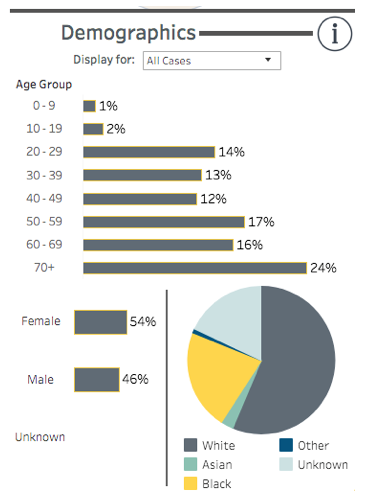
We think that everyone should still remain cautious in Allegheny and Beaver country through at least the end of August. It is going to take effort to keep everyone healthy when all the public places begin to open back up. We are going to have to keep things as calm as possible until the scientists release a proper vaccine, because if we aren’t careful, there is a higher chance that the virus will return, or even mutate into something worse.
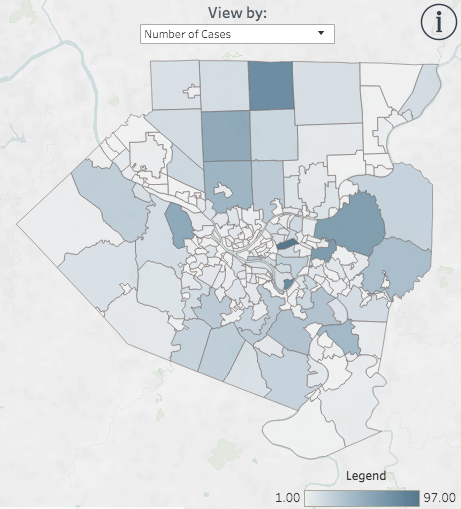
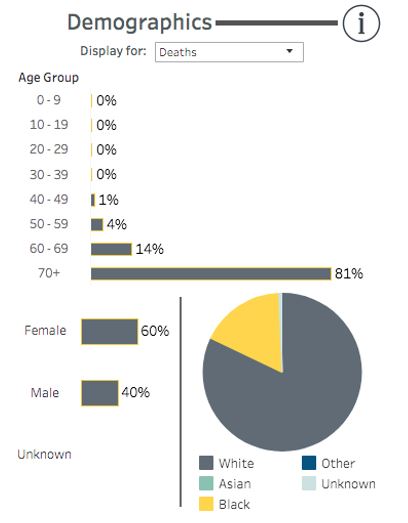
Everyone who dies from the virus in our area was at least over the age of 40, and over 80% were over age 70. These statistics show how much more dangerous it is for older people; if you know someone over the age of 70, stress safety precautions, and help them through these times in whatever way you can. After all, 1.8 million U.S. citizens have been infected by the virus, and 6.2 million people worldwide; it is not a gimmick, help us keep our elders protected.

There have been over 100,000 deaths so far in the United States, and over 372,000 deaths worldwide.
2020 has been a very interesting and uncertain time for all of us; it’s the first pandemic since 1918 (the Spanish influenza). Scholars say that anywhere between 50-100 million people were killed from the influenza. The 2nd worst pandemic of all time was in 1796, which was the smallpox disease, killing approximately 300 million people. The worst pandemic of all time, even though it does not have the most casualties, it has been around the longest and is still affecting us all today with no cure. HIV has killed over 32 million people.
We are encouraged that the virus numbers have slowed down, and businesses are opening across the State and in Pittsburgh. In times of great uncertainty and market disruption, we at Schenley always find investment opportunities. We like the health care, technology, electronic funds transfer or fintech sectors. If you have any questions or concerns during this uncertain time, please do not hesitate to reach out to us at Schenley Capital, Inc.


ROTH IRA’s (Individual Retirement Account) are flexible retirement accounts for individuals who are looking for a tax advantage retirement savings vehicle. There are many ways in which ROTH IRA’s can be more beneficial than traditional IRA’s. One being that the account owner’s money grows tax-free. Also, there are no minimums to open this type of retirement account. It is like a traditional IRA because the maximum contribution is the same ($6,000 per year). It differs from other investment accounts because the money in the account grows tax-free, and it can be withdrawn tax-free when you retire. You may have both a traditional IRA and a ROTH IRA simultaneously, but your total max contribution in both accounts must equate to $6,000 or less each year.
An overwhelming number of Millennials have been investing in ROTH IRA’s due to their tax-free properties. ROTH IRA’s target individuals who make less than $124,000 per fiscal year; if you make more, you may not contribute to a ROTH IRA. If you are married, your combined annual income must be below $196,000, to be able to contribute to a ROTH IRA. For Millennials, this type of retirement account makes sense because those that are younger tend to be in a lower tax bracket. The years of compounding tax-free earnings, along with tax-free withdrawals in retirement, far supersede the annual tax deductions from a traditional IRA account. Additionally, ROTH IRA’s offer more flexibility because individuals can’t take a tax deduction in the same year when contributing to a traditional IRA.
ROTH IRAs have several benefits regarding withdrawals and tax penalties. Just like a traditional IRA, one should not withdraw funds before age 60; although, you could in special circumstances because the ROTH has very flexible rules for qualified expenses. In a ROTH, you can withdrawal any contributions without penalty. ROTH IRA’s have special circumstances, called qualified distributions, when you can withdraw funds. For example, if you are looking to purchase a first-time home, you can take up to $10,000 without incurring taxes. Also, if you are looking to pay off student loans you may withdraw from your ROTH IRA contributions. ROTH IRAs can give people the flexibility they need to retire, become a first-time homeowner, start a family, or pay off medical bills.
ROTH IRA’s use after-tax dollars. For example, income tax is paid on the money after income is earned from a salary, or any other taxable income; that money that has already been taxed goes into the retirement account. Therefore, you will not pay a tax when you withdraw the funds in retirement – this could potentially be a huge benefit. All this time your funds are growing, and compounding, tax-free.
Not only are the withdrawal penalties significantly more lenient than a traditional IRA, but there is also no required minimum distribution. Typically, in a traditional IRA, once the account owner becomes age 72, he or she is required to receive a distribution from the traditional IRA each year. If you forget to take the Required Minimum Distribution (RMD), the penalty is very steep; the IRS will tax 50% of the amount of the RMD. However, in a Roth IRA, the account owner can continue to make annual $6,000 contributions to the ROTH, without being required to receive a distribution at age 72.
The flexibility of ROTH IRA’s make this type of retirement account ideal for Millennials, or individuals who make less than the salary cap of $124,000 per year.
If you, or someone you know, has questions or concerns about your retirement account(s), please contact Schenley Capital.

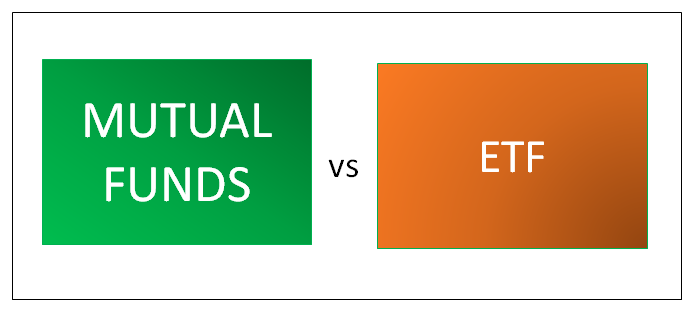
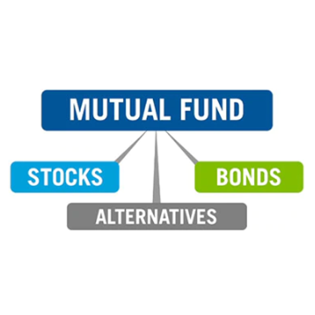
A Mutual fund is a combination of many stocks and bonds. The mutual fund pools cash, giving the investor the ability to purchase small pieces of stocks, bonds, or a collection of assets, and simultaneously providing investors a cheap way to diversify and reap market gains, while still hedging against losses. Professionals manage the holdings that make up the fund’s portfolio. Investors buy shares that rise or fall in value based on the performance of the fund’s underlying securities or holdings. Unlike stocks, mutual fund investors do not have direct ownership or voting rights of the stock; however, mutual fund investors do share equally in the profits or losses of the fund’s total holdings.
Owning a single share of Amazon would cost approx. $2,300 today; however, there are many mutual funds that cost less than $30 per share. The mutual fund owns Amazon, and other stocks such as Apple, Johnson and Johnson, Ford, etc. So, the investor can still own a diversified group of these expensive stocks for a much cheaper rate, concurrently reducing even more risk through diversification. Some mutual fund companies focus mainly on small cap companies, or just fixed income; knowing your asset classes are still a very important factor in the investment portfolio.
Since all mutual funds are professionally managed, it cost money to buy shares of mutual funds. At Schenley, we give our clients the institutional share class expense ratio, which gives us the ability to pass on a lower cost to our clients when purchasing mutual funds with us. Mutual funds are priced once a day after the market closes at 4:00 P.M.
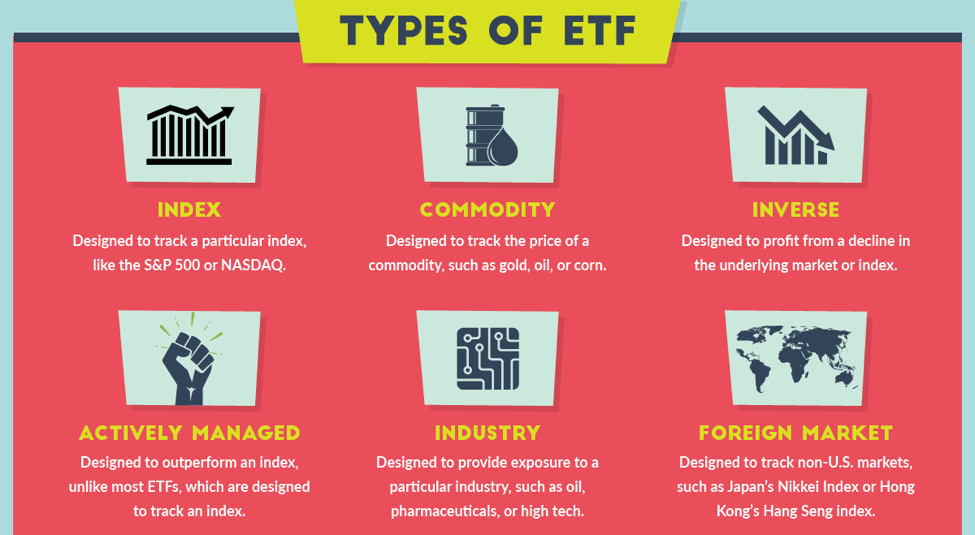
Exchange Traded Funds (ETF’s) have the ease of trading exactly like a stock, meaning the price of the ETF changes by the minute, and changes within the trading day. ETF’s also have the diversification benefits of mutual funds, usually with lower costs. The underlying goal of an ETF is to track the current index and follow it based on the pool of selections, including stocks and bonds. It’s not a stock, not a bond, and not a mutual fund, but its own fund that can be traded on an exchange. There are different types of ETF’s, but the main one being index exchange traded funds. ETFs give you a way to buy and sell a basket of assets without having to buy all the components individually.
The fund provider owns the underlying assets, designs a fund to track their performance and then sells shares in that ETF to investors. Like mutual funds, the shareholders own a portion of an ETF, but they don’t own the underlying assets in the fund. Investors in an ETF that track a stock index get dividend payments, or reinvestments, for the stocks that made up the index.
An example of an index ETF would be to purchase the S&P500. You would have 500 large cap companies in your portfolio, which essentially gives you a sizable reward with the least amount of risk. An investment in the S&P 500 ETF earned 28.8% last year but lost 6.24% in the prior year. ETF’s are an extremely low-cost way to invest in a group of stocks or bonds, which will diversify your portfolio and reduce risk.
If you have any questions or concerns about stocks, bonds, mutual funds, or ETF’s, or if you want to get started investing, please do not hesitate to reach out to one of our advisors at Schenley. We look forward to hearing from you.

Click the link below to view “What you need to know about Stocks & Bonds”